Void Vision (12'') - Cyber People
Cyber People, like many of the Italo disco groups during the movement's peak, was a group spearheaded by a producer. In this case, the producer was Alessandro Zanni, who was also the producer behind such noted Italo groups as Koto, Faxe, and Hypnosis, as well as Ken Laszlo's Europop smash hit "Hey Hey Guy." Though Cyber People's tenure was short-lived, it did produce three very important singles in the Italo movement: "Polaris," "Doctor Faustu's," and "Void Vision."
The Columbia Years (1962-1968) Disk 3 - Thelonious Monk
Thelonious Sphere Monk (Rocky Mount, North Carolina 10th October 1917 - Hartsdale, New York 17th February 1982) was a jazz pianist and composer. Widely considered as one of the most important musicians in jazz -- he is one of only five jazz musicians to be featured on the cover of Time -- Monk had a unique improvisational style and made numerous contributions to the standard jazz repertoire, including "Epistrophy," "'Round Midnight," "Blue Monk," "Straight No Chaser" and "Well, You Needn't."
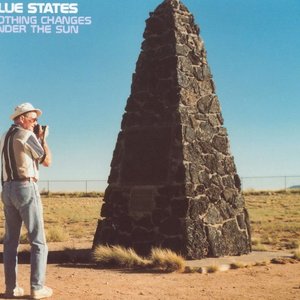
Nothing Changes Under the Sun - Blue States
Blue States is an electronic/dream pop band headed up by Andy Dragazis. The band has been active since 1997 and is still producing music out of Sussex, England as of 2005. A track from their 2002 album Man Mountain, "Season Song", appeared on the soundtrack to the British horror film, "28 Days Later". 1998 Inspired by Aphrodite’s Child and David Axelrod, 22 year old, half-Greek man mountain Andy Dragazis aka Blue States records demos on his home studio set up in a barn on the Sussex Downs in England.
#downtempo #chillout #2000 #lounge #electronic

Hi Scores (EP) - Boards of Canada
Boards of Canada are a Scottish electronic music duo consisting of brothers Mike Sandison and Marcus Eoin. They initially signed to Skam Records and later to Warp Records in the 1990s, gaining wider recognition after the release of their debut studio album "Music Has the Right to Children" in 1998. The album was followed by Geogaddi (2002), The Campfire Headphase (2005), Tomorrow's Harvest (2013), and Inferno (2026), all of which contributed to their reputation within electronic music for distinctive production and atmospheric composition.
Loess - Talus (Tobias Lilja remix)
Loess is a duo from Philadelphia of Clay Emerson & Ian Pullman.